
Women’s rural entrepreneurship in focus at Rural Udyamita 2025
Discussions centred on policy, finance, digital inclusion, skills and market integration to support rural women in moving from livelihood activities to sustainable enterprises
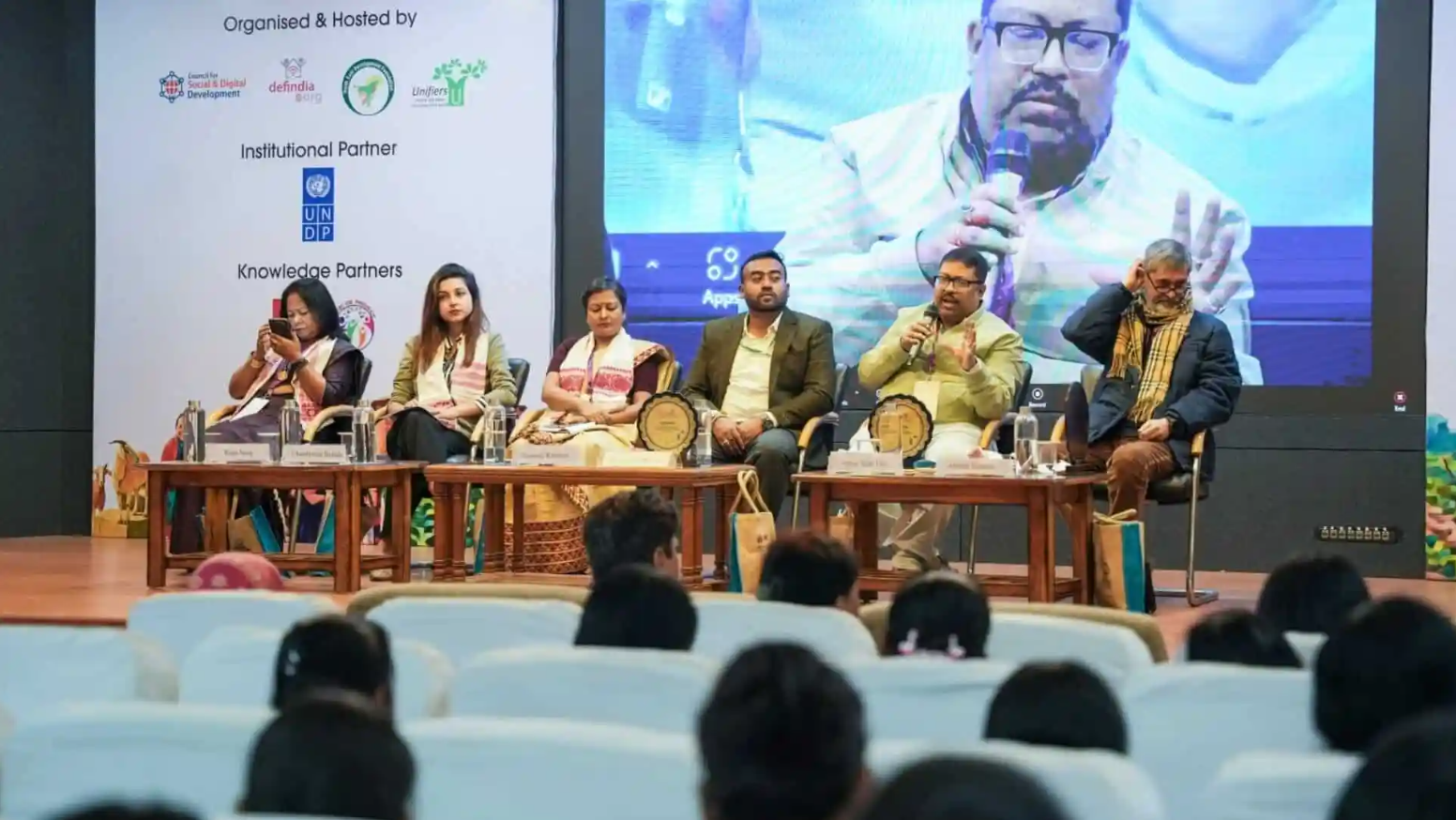
The Rural Udyamita Conference 2025 brought together representatives from government bodies, development agencies, corporates, financial institutions and rural women entrepreneurs to discuss strategies for strengthening women-led enterprises in Assam, West Bengal and the wider Northeast. The conference was held on December 12, 2025, at the NEDFi premises in Guwahati.
The focus of the conference was on structural reforms, institutional collaboration and market-linked approaches required to position Rural Women Entrepreneurship (RWE) as a contributor to regional economic development. Discussions centred on policy, finance, digital inclusion, skills and market integration to support rural women in moving from livelihood activities to sustainable enterprises.
The event was organised and hosted by the Council for Social and Digital Development, Digital Empowerment Foundation, North East Development Foundation and Unifiers Social Ventures. It was co-organised by the Udyamini RWEP Collaborative, which includes The Goat Trust, Transform Trade, Grameen Sahara, SwitchOn Foundation and the Digital Empowerment Foundation. UNDP participated as the institutional partner, while Grassroots Tea Corporation and Vrutti supported the conference as technical partners.
The opening session featured a panel discussion on strengthening RWE as a component of resilient rural economies and the Sustainable Development Goals. Moderated by Dr Sriparna B Baruah, Adviser, NEHHDC, the panel included representatives from UNDP, DAY-NRLM, DABUR India, NABARD, UN Women and ASRLM. Dr Baruah highlighted the need for inclusive growth, ecosystem-based approaches and gender-responsive economic frameworks. She noted that rural women entrepreneurs in Assam and West Bengal require consistent access to credit, clean energy, digital infrastructure, skills and market linkages.
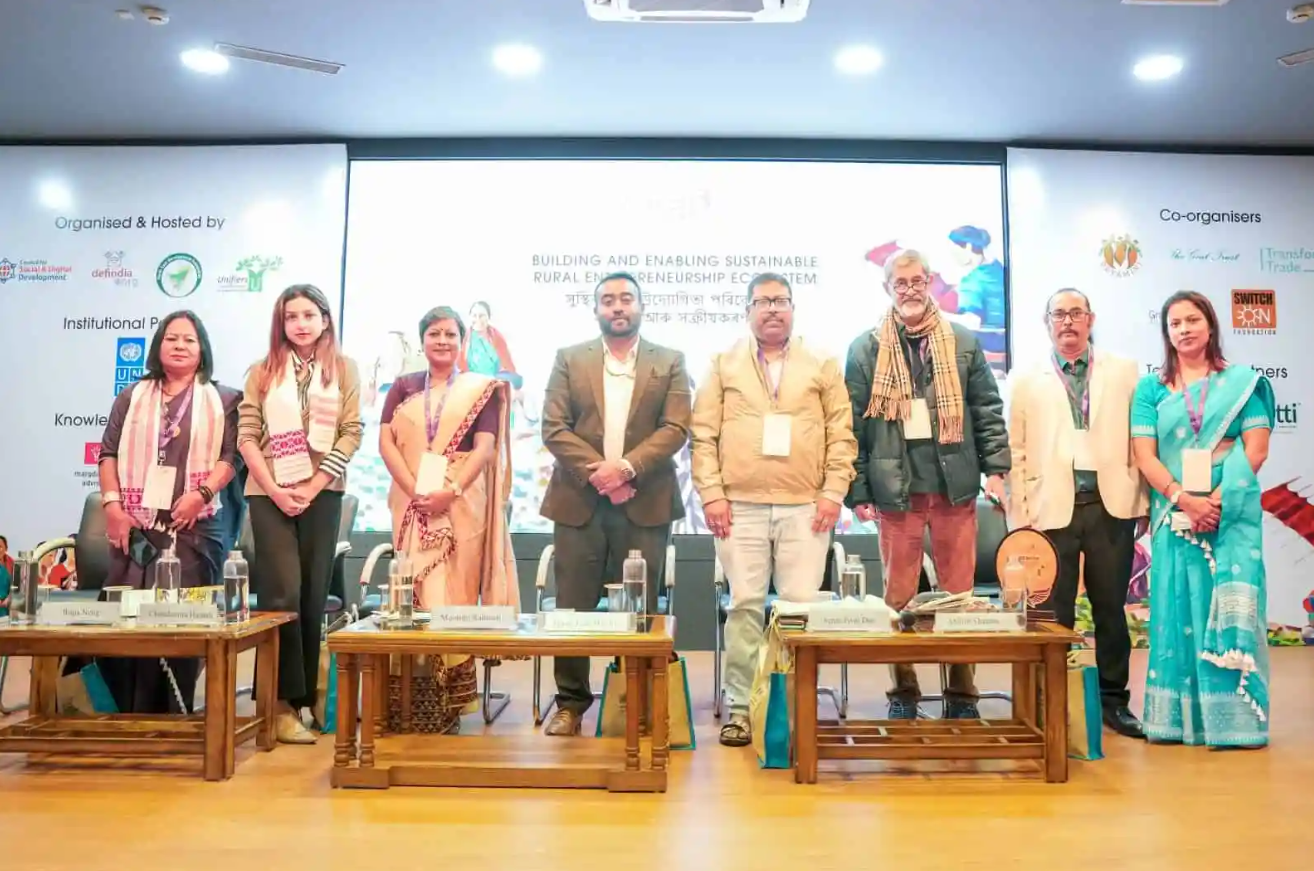
John Borgoyary, Regional Head for the Northeast at UNDP, described rural women’s entrepreneurship as both a development and social protection pathway aligned with multiple SDGs. He outlined three priorities for UNDP’s work in the region: climate-resilient enterprise models, digital inclusion and value-chain-based entrepreneurship. Borgoyary referred to the “Empower Her Journey” initiative with NEDFi, under which 800 rural women have been trained in digital literacy. He also pointed to low levels of digital payments in the Northeast, an issue currently being assessed at the request of the Department of Financial Services. He emphasised the need for stronger institutional partnerships, producer collectives and targeted policy reforms to achieve scale.
DAY-NRLM Director Raman Wadhwa shared perspectives from the mission’s engagement in the Northeast, stating that the region has developed livelihood and enterprise models that are now referenced nationally. He said DAY-NRLM has moved from a savings-led approach to one focused on enterprise development, market integration and value addition. Referring to initiatives such as the Lakhpati Didi model in Assam, he noted that women in the region are increasingly positioned to expand enterprises sustainably. He outlined priorities up to 2030, including improved credit access, enterprise incubation, departmental convergence, stronger value chains and digital platforms to reduce transaction costs.
Byas Anand, Head of Corporate Communications and CSR at DABUR India, discussed the company’s experience working with rural entrepreneurs across India. He identified four areas required to mainstream women-led enterprises by 2030: quality certification, scalable market access, digital onboarding and long-term capacity-building beyond CSR timelines. Anand cited initiatives in Sonitpur, including livelihood training for women, a boxing academy and farm-to-factory linkages for medicinal crops. He stated that sustained impact depends on partnerships and shared responsibility rather than one-time interventions.
Indrajit Das, State Project Manager for Enterprise Promotion at ASRLM, spoke about Assam’s shift from livelihood earning to livelihood entrepreneurship. He outlined the state’s priorities, including strengthening self-help group enterprises, district enterprise cells, digital skills and cluster-based value chain development.
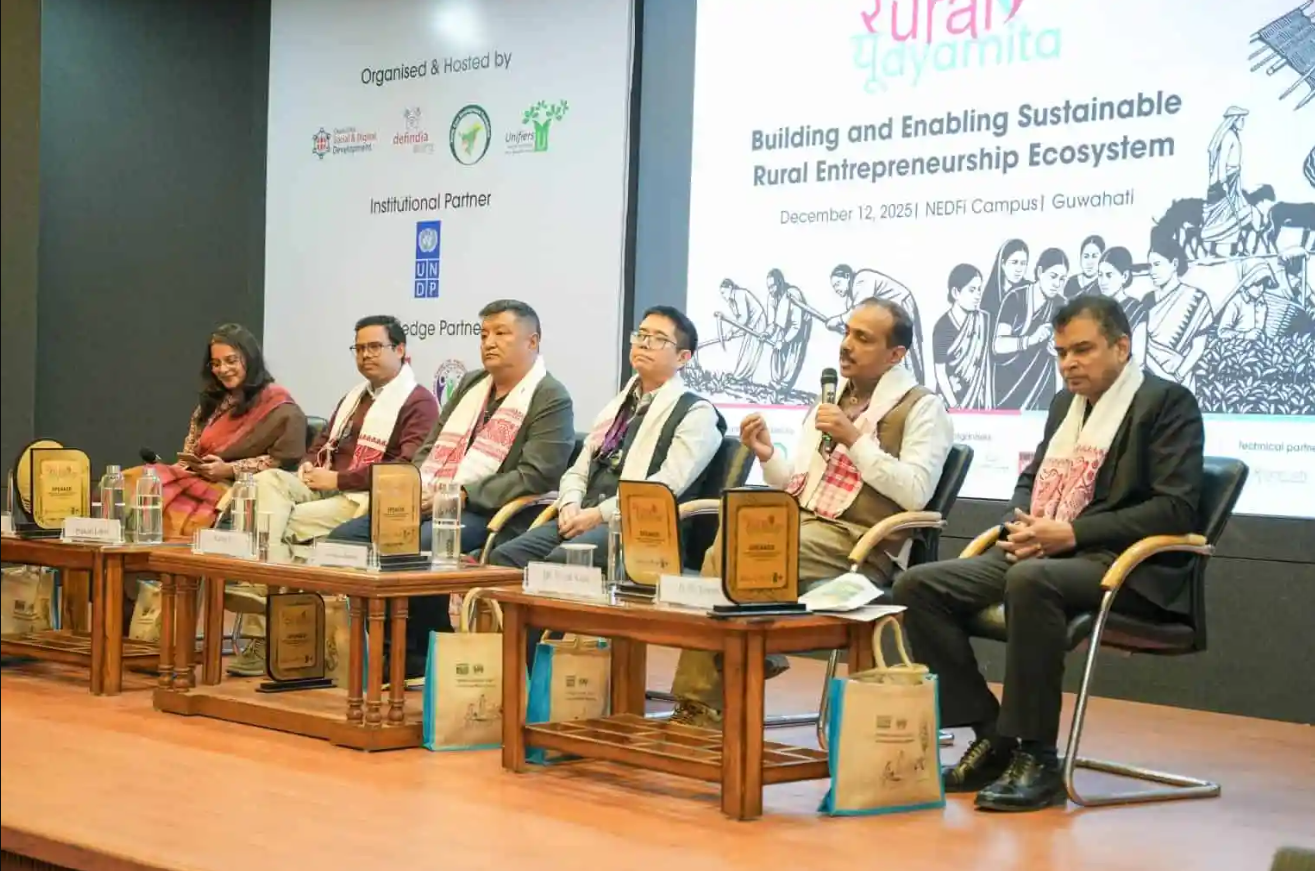
The second session, a Rural Udyamita Open Townhall on ease of doing business for rural women entrepreneurs, provided a platform for micro-entrepreneurs to discuss challenges related to credit, markets, skills, digital tools and ecosystem support. Chaired by Prof Abhijit Sharma of IIBM and former Director of IIE, the session included participants from NEHHDC, UNDP, NERAMAC, GBSIPRD and rural enterprises. NERAMAC stressed the importance of product quality, testing, labelling and FSSAI compliance for market readiness, while Prof Sharma highlighted the need for entrepreneurs to understand margins across different market layers and maintain consistent quality.
NEHHDC’s Chandamita Baruah said the organisation has trained more than 20,000 individuals over the past five years in jacquard weaving, handblock printing and related skills. She also announced the inauguration of the Eri Silk Spinning Plant at Mushalpur, developed at a cost of Rs 14.92 crore, with a daily production capacity of 450 kilograms of Eri yarn. The facility is expected to benefit over 50,000 households.
The concluding session featured rural women entrepreneurs Gitanjali Kalita, Masuma Khatun and Bhabhani Rabha, who shared their experiences under the Udyamini RWEP programme. The final policy dialogue, moderated by Ekta Jaju of SwitchOn Foundation, focused on facilitating the transition from livelihoods to entrepreneurship through accessible finance, technology integration, diversified markets and simplified institutional processes.
The conference concluded with participants reiterating the need to scale viable enterprise models, strengthen enabling policy environments and support the development of an inclusive rural economy across the Northeast.